

To many tenants, being a landlord seems like a risk-free way to generate income, an investment approach with few downsides. How wrong that idea is! Veteran and new to the role, landlords understand just how challenging being a landlord can be. Just consider the task of acquiring (and then retaining) residential tenants. Some landlords may believe that signing multi-year leases provides the best possible return, but it may expose them to greater risk.
In this post, we’ll discuss some of the disadvantages of multi-year residential leases, who multi-year leases really protect (hint: it’s not the landlord), and when long-term leases make sense. NOTE: This post focuses on renting to residential tenants. Commercial leases operate under very different rules, and longer-term leases make good financial sense for both parties. Also, residential or commercial, leasing activity is situational. Different markets, different tenants and different landlords can lead to exceptions to the generally accepted best practices.
Want to learn more about Property Management?
Request Information | or Call Us at 312-329-8400
Rents Falling Behind Market Values
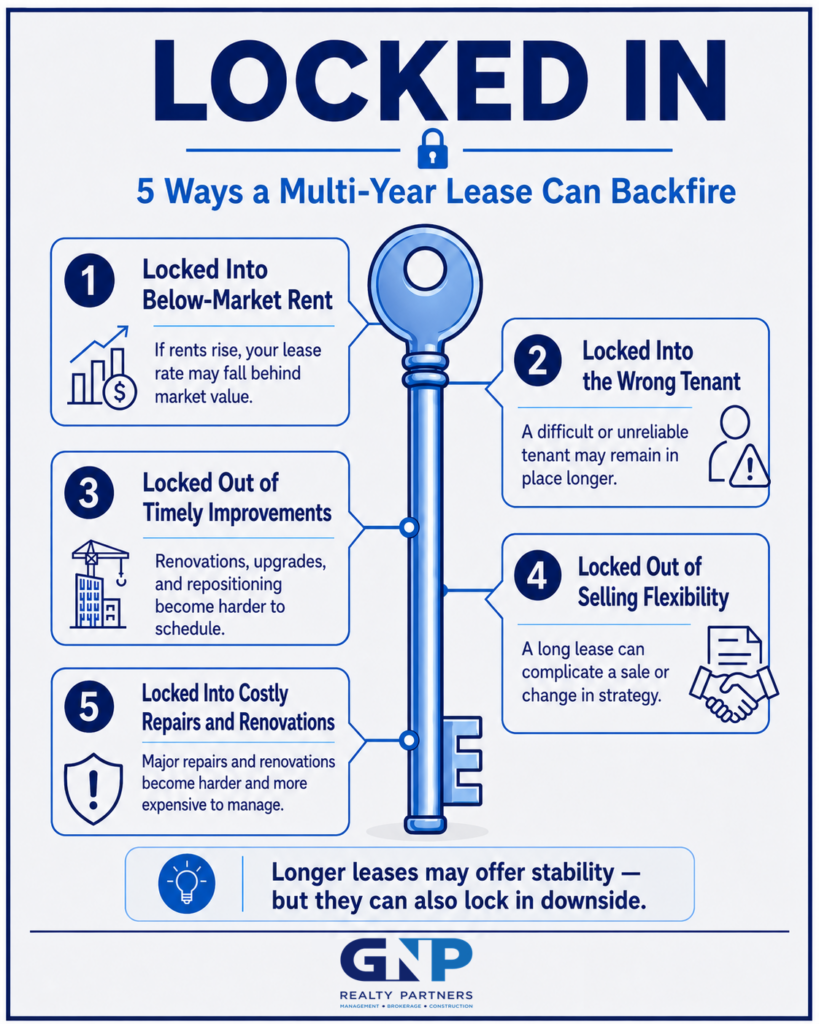
One of the most important reasons for not signing two-year or longer rental agreements is the inability to adjust to market rates. Fans of long leases will counter that you can build in increases to your rental agreement. While true, multi-year tenants will rarely tolerate large rent increases and will simply break a lease when confronted with them (or may resist signing a lease that includes anything more than a minimal increase).
Stagnant Rental Income if the Market Changes Over the Duration
During periods when market rents rise rapidly, landlords can certainly feel the pain. At a time when many markets are experiencing a housing shortage — especially for first-time buyers — there is almost always upward pressure on rents. Landlords may quickly find themselves with a year or more of stagnant rental income when monthly rents fail to keep pace with real costs. In the most extreme situations, the landlord could find a leased property costing them more than it generates.
Tenants Can Break a Lease; You Cannot
Breaking a lease is generally much easier for tenants, with few financial disincentives to deter them from violating their rental agreement (e.g., losing a security deposit, owing several months’ rent and damaging their credit history). Conversely, landlords face significantly more legal restrictions because residential tenants have statutory protections that often cannot be waived by contract. Landlords who break a lease could face:
- A complaint filed in small-claims court
- A state or federal discrimination lawsuit
- Five- or six-figure monetary damage sums
- A situation where they must pay the tenant directly to gain control of the property (aka a “cash for keys” arrangement)
None of these options is attractive from the landlord’s point of view, and they highlight an important truth: Multi-year leases do much more to protect a tenant against uncertainty than a landlord.
You Can Get Locked into Undesirable Tenants
One of the potential benefits of long-term leases — namely retaining regularly paying, long-term tenants — can also have a significant downside. Though many landlords pride themselves on their ability to screen new tenants, few can say that they have never had an undesirable tenant. Once a tenant has gained access to a property, it can be hard (and time-consuming) to evict an undesirable tenant. Further, a tenant can do significant damage to your property with little ability to prevent it.
Larger Repair and Renovation Costs between Tenants
Beyond the damage caused by a bad tenant, long-term renters can result in higher costs when the property turns over. While, through no direct fault of their own, the inevitable wear and tear on a property by long-term occupants necessitates repairs and property “refreshers.” Deferred maintenance can lead to more serious issues. For example, an HVAC system that receives regular maintenance will likely have a longer lifespan. While it’s not often considered a benefit, regular turnover provides an opportunity to conduct much-needed maintenance on your real estate.
Less Flexibility if You Want to Sell or Reclaim Space
Beyond limiting rent increases and performing maintenance, a long-term lease limits your ability to adjust your financial strategy in the near term. Consider a scenario where the market dramatically shifts to a seller’s market, and you decide now is the time to sell. Your long-term lease may prevent you from doing so, as you’ll need to honor its terms. Carefully written rental agreements may carve out special provisions that allow you to remove a tenant in these or similar circumstances, but most boilerplate leases don’t. When you want to dispose of your real estate, long-term leases merely tie your hands.
Longer Leases Can Benefit Smaller Operations
So, if multi-year leases are such bad deals for landlords, why would you ever choose one? Depending on your situation, the predictability and stability of income and the elimination of marketing and other leasing expenses may offset the potential disadvantages. Landlords with a single property or less economically flexible real estate, where raising rent isn’t really an option, may benefit from:
- Stable income
- Fewer turnover expenses
- Known tenant
- Strong tenant relationship
Data Confirms the Advantages of Annual Leases
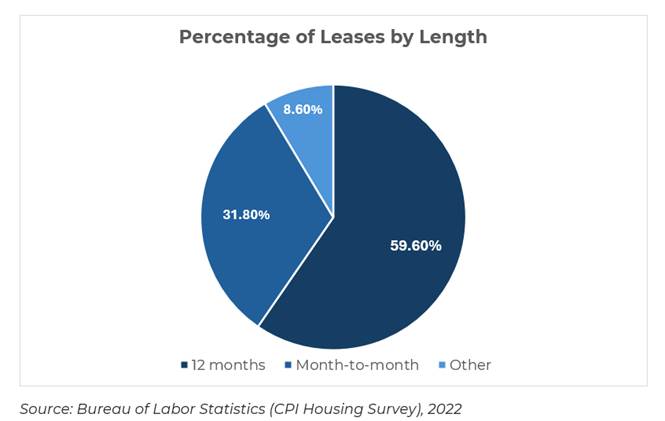
As noted, there are no hard rules for determining the length of a residential lease. However, given that more than 90% of tenants report having either a month-to-month or a 12-month lease, this suggests that landlords overwhelmingly find that long-term leases offer few benefits and that the ideal lease term is 12 months. The ability to adjust rents in response to market values, remove an undesirable tenant on relatively short notice, and perform maintenance on a regular basis that comes with a 12-month lease outweighs the stability of income and the reduced leasing expenses associated with long-term leases.
Are you still wondering whether a long-term lease makes sense for you? GNP Realty Partners can counsel you regarding your specific situation. We work with numerous landlords to manage properties of all sizes throughout the Chicago area. Contact us today at (312) 329-8466.
Updated July 31, 2026: This article has been revised and expanded with additional information about residential lease terms and landlord considerations.